
The most important question when considering high-pressure die-casting (HPDC) for aluminum isn’t “what is HPDC,” but “is your design actually suited to HPDC.” This article offers a concrete technical evaluation framework, built around four decisive parameters, so you can check your own design before sending it to any supplier.
Four technical parameters that decide whether a design suits HPDC
01. Wall thickness: both the upper and lower limits matter
HPDC is well known for its ability to form thin walls thanks to high injection pressure, but the technology also has a lower limit, not just an upper one. If a wall is too thin relative to the alloy’s fill capability, the molten metal can solidify before fully filling the mold, causing a short shot.
Conversely, if a wall is too thick relative to the surrounding sections, that area cools more slowly, leading to uneven shrinkage and potential internal shrinkage porosity. The key principle is that wall thickness should be as uniform as possible throughout the part, avoiding abrupt transitions between thick and thin sections.
02. Mass-to-surface-area ratio
This ratio directly affects the cooling rate of each area on the product. A feature with concentrated mass at one point (a thick reinforcement rib, a large boss) cools significantly slower than the thin surrounding walls, creating a thermal gradient during solidification — a common cause of warping after demolding.
When reviewing a drawing, look for spots with unusually concentrated mass — these are typically points that need design adjustment before the mold is made, not after warping is discovered during a trial run.
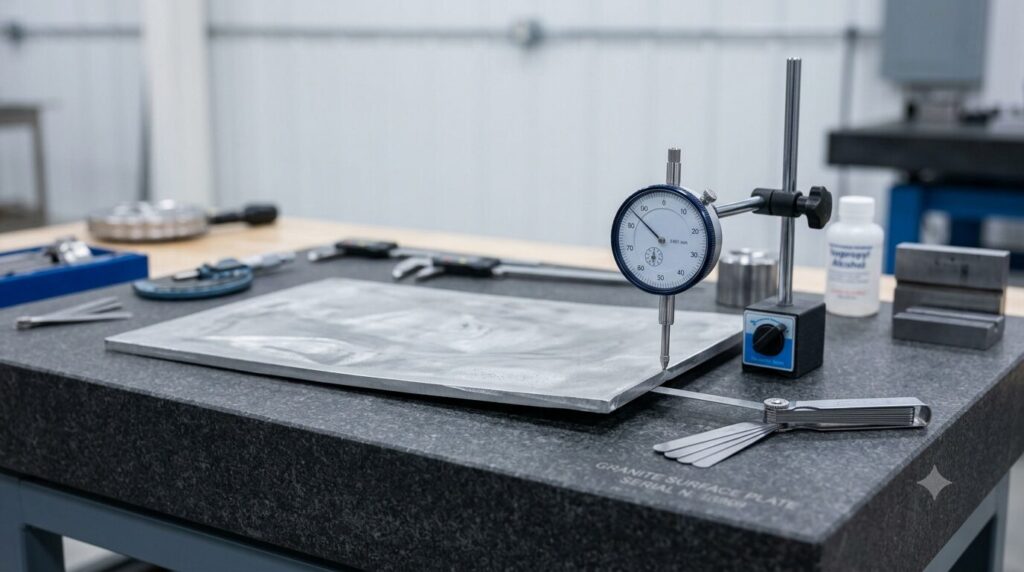
03. Required tolerance versus HPDC’s actual capability
Surfaces perpendicular to the mold’s opening direction typically achieve higher precision, while surfaces parallel to the parting line tend to be affected by flash and mold wear over time, widening the actual tolerance beyond the theoretical design.
If your drawing calls for tight tolerances at exactly these locations, it’s best to discuss early with the mold maker whether additional CNC machining after casting is needed, rather than expecting the mold to achieve that tolerance in a single casting step.
04. Gas-tightness and pressure-resistance requirements
This is the most commonly overlooked parameter, yet the most significant inherent limitation of HPDC. Because molten metal is injected at high speed, air in the mold cavity tends to get entrained in the metal flow, forming small gas porosity voids scattered inside the casting.
For most ordinary mechanical applications, these voids don’t affect function. But for products requiring absolute gas-tightness — pressure housings, hydraulic components — these voids can become a potential leak path.
When HPDC is NOT the optimal choice
Most content about pressure die-casting only covers the advantages, rarely addressing head-on the cases where HPDC isn’t the best choice. Recognizing these cases early saves considerable time and mold-making cost.
Three situations where you should consider a different technology instead of standard HPDC:
- Absolute gas-tightness requirement (hydraulic, pressurized pneumatic components) → consider vacuum die casting or squeeze casting.
- Small order volume (roughly under 1,000 units/year) → gravity die casting or even sand casting is often more economical, since HPDC mold cost is only optimized when amortized over large production volumes.
- Locally very thick wall sections at mechanically critical load-bearing points → consider breaking the thick section into thinner reinforcement ribs instead of accepting shrinkage porosity risk.
How Daiwa handles HPDC’s technical limitations in practice
Rather than avoiding the limitations above, Daiwa’s technical team addresses them directly through mold design and casting machine parameters.
For gas porosity, the location and number of vents on the mold are calculated based on simulated metal flow direction before the actual mold is machined, rather than applying a standard vent pattern to every design. The gate and overflow system are positioned to direct the earliest-solidifying metal away from the main forming cavity.
For thermal differences caused by uneven mass distribution, mold cooling parameters (cooling-channel location and water flow rate) are adjusted locally at areas of concentrated mass, rather than applying a uniform cooling cycle across the entire mold. For tight-tolerance locations that are hard to control through casting alone, Daiwa proposes additional CNC machining as early as the mold design stage.
A real design scenario
Picture a rectangular aluminum enclosure with a thick central reinforcement rib for a screw boss, while the surrounding walls are noticeably thinner — a very common structure in electronics and industrial equipment, but also one prone to warping and porosity defects if not handled properly.
When evaluating this drawing against the four parameters above, the first question is whether the thickness difference between the rib and the surrounding wall creates a significant cooling-rate gap. The second question is whether the rib location is a tight-tolerance surface — if so, it should be flagged separately for possible additional CNC machining. The third question is whether the product requires gas-tightness — if it’s just an ordinary protective enclosure, small gas porosity inside the rib won’t affect function, but if the enclosure needs to meet an IP water/dust-resistance rating, this is something to address carefully from the design stage.
Asking questions in this sequence, rather than sending the drawing straight over and waiting for a yes-or-no reply, lets the design engineer and the mold maker communicate in the same technical language from the outset, significantly shortening the number of design revision rounds before the mold is officially made.
Send us your drawing for a technical assessment
If you have a specific drawing and aren’t sure whether that design is truly suited to HPDC, Daiwa’s technical team is ready to review it and provide an assessment based on the four parameters above, before you invest in a mold.
This article is for technical reference; please contact us directly for advice tailored to your specific requirements.